Showing posts with label book blog. Show all posts

Thursday, February 2, 2017

Some of Us Had Been Threatening Our Friend Colby - Donald Barthelme (In A Field of Words: A Creative Writing Text - Janet McCann)


Summary: This is an innovative, self-help guide for beginning-level creative writing, designed to help aspiring writers find words for their stories and give them shape. It includes all a writer needs to begin writing fiction, creative nonfiction and poetry including ways to get started, things to write about and where to find help in all elements of writing including first publication. The text incorporates practice exercises and a multi-cultural mini-anthology of work in all three genres. Discusses in detail the elements and techniques of poetry, fiction and creative non-fiction. Provides practical exercises sections and features a Multi-cultural anthology. For aspiring writers interested in learning how to write poetry, prose and non-fiction.

Author: Janet McCann
Story: Some of Us Had Been Threatening Our Friend Colby
Genre: Short Story, Fiction
Goodreads Rating:
My Rating (for this short story): 3.5/5
Pages (for this story): 21-24 (281)
Publisher: Pearson

(Side note: The following is my analytical critique of a short story from a collection of stories that I am currently studying in my Intro to Creative Writing course. I wanted to share this story because of how interesting it is, and the concept of depositing the bizarre into our everyday realities.)

"Some of us had been threatening our friend Colby for a long time, because of the way he had been behaving. And now he'd gone too far, so we decided to hang him."


                        Donald Barthelme’s short story, Some of Us Had Been Threatening Our Friend Colby is bizarre, engrossing, and somewhat intense. The first two sentences alone, are enough to grab the reader’s attention and leave them wanting more – craving answers and closure. The reader is left with more questions than answers by the final sentence. Many of these unanswered questions are crucial to the plot as well, which incites a great deal of confusion in regards to what the author is attempting to convey to his reader.

                        Barthelme doesn’t waste any time in this story, right off the bat the reader is introduced to the plot, the characters, and the dilemma. The narrator remains unnamed, but highly prevalent and involved in the story, and his/her lack of identity is somewhat irritating amidst the already confusing plethora of unanswered questions and unknown facts. As the reader continues to read on, he/she is introduced to the dilemma. Colby William’s friends have deemed that he had gone too far, something that Colby, himself, did not dispute. But, Colby does interject by mentioning that everyone goes a little too far sometimes. His friends shrug off his argument and proceed to make detailed plans and arrangements for the hanging that they will be holding as a form of moral punishment for Colby’s transgression. These detailed arrangements range from hiring musicians, sending out invitations to all the guests, serving drinks and food, designating a venue for the hanging, deciding on whether they should use a gibbet or a tree, hangman or no hangman, and lastly rope or wire for the noose.

                        Throughout this entire debate over how Colby’s hanging should be orchestrated and how to hide the details of the event from law enforcement, Colby’s friends are kind enough to allow him to have a say in some of the tedious decision making, since after all it is his hanging and a man only gets one opportunity in life to be hanged. The reader is informed that the day of Colby’s hanging goes off without a hitch; no rain to dampen the day, the music was played well, and they didn’t run out of scotch. The unnamed narrator leaves the reader with two final thoughts. He/she states that what he/she could remember best from the event is Colby’s look of gratefulness after the narrator chimed in and said that wire for a noose would be too distasteful and that no one dared to go too far ever again.

                        Barthelme’s short story was written in the first-person point – of – view. Which is interesting because the narrator remains both unnamed and a wallflower for a good portion of the tale. It’s almost as if the narrator’s sole purpose is to act as a window for the reader to be able to look in on the events and the conversation that transpires. Aside from somewhat steering the conversation in a certain direction, once or twice, the narrator’s actual contribution to the conversation is minimal. Often, a writer will employ the usage of the first-person narrative to create a sense of rapport or familiarity between the narrator and the reader, which proves to be somewhat confusing in this instance since the narrator remains unnamed, unknown, and distant.

                        The characters in this story are unanimous in their conviction to hang Colby and to do so tastefully. But, disagreements became apparent when there was debate over whether they should use a gibbet or a tree, wire or rope for the noose, if Colby could have a firing squad instead of a hanging, should Colby jump off a chair or a ball with the noose around his neck? What I found interesting is that there was no sign as to who had initiated the desire to hang Colby for his transgression and the fact that out of Colby’s seven friends not even one of them questioned the lack of morality in this execution of their friend.

                        This short story is incredibly bizarre and even unsettling. The more that I read and the more that I grow on a personal level, the more difficult it is for me to refer to another individual’s reality or proposed reality as being bizarre, when my own reality may end up being just as bizarre in their eyes. It is difficult for me to fathom how an individual’s group of friends can be referred to as friends when they are doggedly set on hanging you for an offense that isn’t even mentioned at any point within the story. But, this story is odd and unnerving. In regards to how it could potentially fit into our “everyday” experience, I suppose that Colby’s friends’ determinedness and unshakeable stubbornness could be compared to our own refusals to see reason when we are agitated or fed up with an individual’s repeated “bad” behavior. Then the next question would be, are we Colby or are we Colby’s friends in these “everyday” experiences? Are we able to admit when we have gone too far? Do we go the extra mile and threaten our friend with death because they went too far, one too many times?

                        I thoroughly enjoyed how engaging Barthelme’s writing was and the ease with which his thoughts bled into one another. I even appreciated the bizarreness to an extent. It was different and unanticipated. However, I didn’t care for the enduring anonymity of the narrator, or the unaddressed question of what exactly was Colby’s wrongdoing; why didn’t any of the guests make a fuss about a man being hanged even though capital punishment had been outlawed? Why were Colby’s friends able to find moral fault in his wrongdoing, but not in their eagerness to hang their friend? Why did Colby’s friends feel as though it was their moral obligation to hang Colby for his unnamed wrongdoing? Why didn’t Colby’s friends take the time to reflect on his point that everyone goes too far sometimes? If someone else from the group were to commit an equally offensive transgression would they be subject to a hanging, as well? Why didn’t Colby inform law enforcement that his friends were planning to hang him? Was his offense that horrible that he couldn’t ask for help? But, most importantly was Colby hanged? The title of the short story is: Some of Us Had Been Threatening Our Friend Colby. Threatening an individual and carrying out that threat are both horrible, but very different. Were Colby’s friends just threatening him or did they truly kill him? Or was Colby made an example out of to make sure that no one else in the group “goes too far”? What exactly is “too far”? And who has the power to dictate what is or isn’t “going too far”? I’m not entirely sure. This lack of closure and answers is probably the most frustrating aspect of being reader, in my opinion. In the end, I am left feeling confused, irritated with the lack of answers, and oddly wanting more writing to have been tacked on to this story.

What are your thoughts on depositing the bizarre into our everyday realities? Thoughts on Barthelme's writing?

Links:
Link to this Pearson collection of literary works
Link to Short Stories by Barthelme (Including Some of Us Had...)

Until next time! Thank you for stopping by! And if you have yet to do so, follow me here on my blog via email subscription to be able to stay informed on when new posts are uploaded.

Where the Wild Tales Are Instagram
Goodreads


Tuesday, January 24, 2017

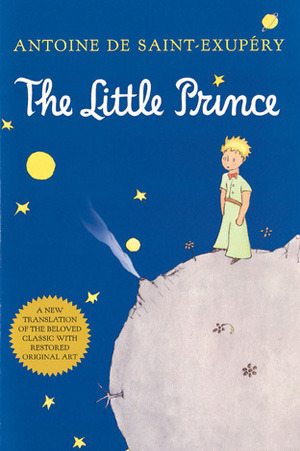
The Little Prince - Antoine de Saint - Exupery Review

           e


Summary: With a timeless charm it tells the story of a little boy who leaves the safety of his own tiny planet to travel the universe, learning the vagaries of adult behavior through a series of extraordinary encounters. His personal odyssey culminates in a voyage to Earth and further adventures.

Author: Antoine de Saint - Exupery
Genre: Classic Literature, Fiction, Fantasy, Childrens, French Literature, European Literature, Philosophy
Goodreads Rating: 4.5/ 5 stars
My Rating: 5/ 5 stars
Pages: 83
Publisher: Mariner Books

"How clumsy I felt! I didn't know how to reach him, where to find him... It's so mysterious, the land of tears."

Before The Little Prince, came Antoine de Saint - Exupery. Saint - Exupery was born in Lyon, France on June 29, 1900. He was born into aristocracy. Saint - Exupery's love for aviation sprouted at an early age. He flew his first plane at the age of twelve and in his adult years he went on to become a pioneering aviator. As a young man, Antoine de Saint - Exupery decided to try his hand at writing. He published a few short stories and magazine entries, but his first novel, Courrier Sud (Southern Mail) was published in 1929. His first novel, along with all of his later novels would feature flying and a love for the open sky in some way, shape or form.

Exiled from France in 1940 for his refusal to stop speaking out against Germany in the face of the stirring of Nazi Germany, after France's armistice with Germany, Saint - Exupery fled to the United States of America in hopes of convincing the U.S. government to take immediate action to snuff out the rise of Nazi Germany. He was unable to gather any real support against the rising of Nazi Germany in the U.S., but his writing career did take off. April 6, 1943 The Little Prince was published in New York. (The French edition, Le Petit Prince wouldn't be published until 1946 after both the liberation of France at the end of WWII and Saint - Exupery's own death). The Little Prince was Saint -Exupery's last publication before he went off on a reconnaissance mission for the Allies and disappeared over the Mediterranean sea. Neither Saint - Exupery or his plane were ever found, until sixty years later. What was left of the wreckage of his plane was found and identified in the Mediterranean, but the mystery of where his remains lie remains unsolved. It is unknown whether the plane crash was a result of Saint - Exupery being shot down, having a mechanical malfunction, or even suicide. Whichever the case may have been, Saint - Exupery died at the age of forty-four; leaving behind a widow and many unanswered questions. Saint - Exupery's widow, Consuelo de Saint - Exupery, a Salvadoran - French writer and artist, went on to preserve her late husband's work and image. She laid witness to the revered national French hero that her husband became known as.

French aristocrat, writer, poet, and pioneering aviator Antoine de Saint - Exupery wore many hats during his too short life, and it wasn't until after his death that his work received any real appreciation. Posthumously, Saint - Exupery was deemed a laureate of several of France's highest literary awards and the U.S. National Book Award. His reputation as a French hero was gained after his death, as well.  

"But eyes are blind. You have to look with the heart."

The Little Prince is a novel that had been patiently waiting on my TBR list for quite some time, for at least over a year. Whenever I scrolled through bookstagram or Goodreads and I came across The Little Prince, I'd make a mental note to finally purchase the book and see what all of the fuss was about. I never got around to buying the novel for myself. Instead, I was lucky enough to be sent a copy from an absolutely wonderful friend, for Christmas. And yes, I'm still referring to my friend as wonderful even though she didn't prepare me in the slightest for the wild emotional ride that those eighty-three pages whisked me away on. I went into reading The Little Prince with the expectation of a cute, heart-warming read; the standard final thought that most bookstagrammers seemed to have adopted in regards to The Little Prince.

"I wonder," he said, "if the stars are lit up that each of us can find our own way."

At this point in my life, I'm convinced that a reader's perception of a novel is only as deep as the reader's own self-introspection, hence why I finished this book with a heavy heart and not even the slightest sentiment of the tale being cute or heartwarming. Without a doubt, Saint - Exupery brought to life a tale that strums on, plucks, and weighs on your heartstrings. The Little Prince is so much more than "cute" or "heartwarming"; it is an unapologetic, real, and a poignantly beautiful view of life, love, and loss. Saint - Exupery is the kind of author who intrudes on your heart and mind, simultaneously, with the sole purpose of making you stop to appreciate the smaller details in order to see and understand the bigger picture. The Little Prince offers up a telescope to see all the world through, and when you look through that lens you see the world as you'd like it be and as it should be. And you'll end up wishing that you could keep your eye glued to that lens so as to avoid the reality of the world and life, but living through a lens, no matter how ideal, defeats the purpose of living. Rather, we are meant to use such telescopes to look to the sky and find our stars; our path, our purpose, our identities.

In The Little Prince, we meet the Little Prince who leaves his small planet and his rose and two volcanoes behind in order to see the universe. Our Little Prince ends up on Earth, in the Sahara Desert to be exact. The Little Prince is perturbed by this great sadness he feels no matter whom he speaks to. Not even taming the wild fox brings lasting happiness to the Little Prince. Our narrator realizes that he is unhappy because he is neglecting his duty to his lone rose back on his home planet. But how to get back home? The Little Prince stumbles upon a small snake that promises that he can send the Little Prince home, with a quick bite and almost no pain. To go home means to die a physical death. So as the Little Prince attempts to come to terms with this knowledge he finds the stranded Pilot, whose plane is down and in need of repairs. Together the two make a wonderful pairing and become fast friends. They brave the desert together in search of water and truth. But their most daunting trial is facing loss and the ache of losing the physical presence of a loved one. More than just a children's story, The Little Prince is a deeply emotional account of life and finding the beauty in mystery and sadness... I cannot recommend this novel enough.

Recurring Main Characters:
  • The Little Prince
  • The Pilot
  • The Snake
  • The Rose
Primary Setting: The Sahara Desert

Major Themes:
  • The snake
    • Loneliness
    • Death
  • The danger of narrow - mindedness
    • The Little Prince represents a child's open - mindedness, as well as the wanderer who is decidedly eternally inquisitive. To Saint - Exupery, inquisitiveness represented the key to true understanding and happiness.
  • Enlightenment
    • To become enlightened we must explore
    • Adventure; explore the outside world
    • Introspection; explore within yourself
    • Saint - Exupery believed that spiritual growth could only be done properly through active exploration
    • We come to better understand our natures and our purposes in this world through exploring the world and our own feelings
  • Responsibility
    • The belief that relationships teach responsibility, and that responsibility is required for lasting healthy relationships
    • Relationships give us a better understanding and appreciation of our individual responsibilities to the world
  • True meanings are hidden
    • In life definite answers are never guaranteed
    • The exploration of the unknown is necessary
  • Taming
    • Creating ties
    • We must tame people and concepts to understand them
  • The desert = a hostile place; the narrator's mind
  • The drinking of the water = symbolizes spiritual fulfillment
  • The train rides = the rushed voyages we take in life that never result in happiness. We tend to never be happy where we are because we don't live in the present, we live for the future. The symbolization of the trains rushing at one another from opposite directions hints at how contradictory and purposeless our efforts at life as adults, truly are. But it is the children with hungry eyes glued to the windows that grasp the truth: that the journey is more important than the destination.
" People start out in express trains, but they no longer know what they're looking for."

**Spoiler Alert**


By far my favorite analysis of this short tale is the relationship drawn between the final scene of The Little Prince and the childhood death of Antoine de Saint - Exupery's younger brother, Francois de Saint - Exupery. At the age of fifteen, Francois died of rheumatic fever. He was Antoine's closest confidant and his memory would go on to serve as the inspiration for both the tale of The Little Prince and the character of the Little Prince, himself. Francois was the ever inquisitive, blond haired, Little Prince and Antoine was the pilot who couldn't hold on tight enough to the Little Prince, so he was left with the stars as an ever present and ever lasting memory of both his brother, his friend, and the need to make life meaningful. Francois' death is best witnessed in the final dramatic and heart wrenching scene of The Little Prince. Antoine's reflection:
“…remained motionless for an instant. He did not cry out. He fell as gently as a [young] tree falls”
 of his younger brother's death is woven into the ending.

"You understand. It's too far. I can't take this body with me. It's too heavy."
I said nothing.
"But it'll be like an old abandoned shell. There's nothing sad about an old shell..."
I said nothing.
He was a little disheartened now. But made one more effort.
"It'll be nice, you know. I'll be looking at the stars, too. All the stars will be wells with a rusty pulley. All the stars will pour out water for me to drink..."
I said nothing.

Each and every single one of us have been given the chance to live this life and to bring meaning to our own lives and to the lives of those around us. Our lives are journeys. And sometimes we go on a journey for the truth, or to find someone, or to find ourselves, or to find fulfillment. But wherever we go, wherever we end up, we are to know that our stars will never leave us or lead us astray. The stars will be our forever companions in this lifetime, constantly overhead; in our hearts and in our minds, just as all of our loved ones who have passed or who have drifted away, will be. What is written on your heart can never be erased, so no matter where you fly to, who you meet, or where you end up, never forget to look to the stars...

"It's all a great mystery."


Until next time! Thank you for stopping by! And if you have yet to do so, follow me here on my blog via email subscription to be able to stay informed on when new posts are uploaded.


- Anisa


Tuesday, November 15, 2016

Book Haul

First book haul of November.

My first and possibly last book haul of November, since Christmas is right around the corner. But whether this is the last haul of the month or not, I'm quite pleased with my selections from this past weekend's purchase. Book buyer satisfaction aside, I'm also more than happy to say that there are a series of similar running themes throughout each of these books. In light of the U.S. presidential election, the awful fallout, the amount of hate and ignorance that is still rooted within the country, and the saddening realization that there are many who are unwilling to use their voice to speak out against the ingrained hate and conditioned ignorance, I decided that I needed to turn to the comfort of the written word, as I usually do as a means to calm my nerves. Which is where my recurring theme stems from: characters who aren't afraid to challenge the conventional, government, religion, racism, prejudice, sexism, hate, and ignorance. I wanted authors and novels that addressed despair and greeted "the dark days" like an old friend, all while keeping hope propped up on their shoulders. I believe that hope and divine timing are just as indispensable in a novel as they are in life. Fiction is more than fiction; it's a parallel to reality, a means through which to come to terms with reality and to come to understand and plan for a way to create a better future. To grow in the face of adversity. Without further ado, a few novels to put life, compassion, humanity, humility, courage, and empathy into perspective. (Click on the titles for direct links to the books. The summaries that are below are the summaries provided from Goodreads).


          Set in Lombardy during the Spanish occupation of the late 1620s, The Betrothed tells the story of two young lovers, Renzo and Lucia, prevented from marrying by the petty tyrant Don Rodrigo, who desires Lucia for himself. Forced to flee, they are then cruelly separated, and must face many dangers including plague, famine and imprisonment, and confront a variety of strange characters - the mysterious Nun of Monza, the fiery Father Cristoforo and the sinister 'Unnamed' - in their struggle to be reunited. A vigorous portrayal of enduring passion, The Betrothed's exploration of love, power and faith presents a whirling panorama of seventeenth-century Italian life and is one of the greatest European historical novels.
         (Reread for me).
         Written in 1953, The Crucible is a mirror Miller uses to reflect the anti-communist hysteria inspired by Senator Joseph McCarthy's "witch-hunts" in the United States. Within the text itself, Miller contemplates the parallels, writing, "Political opposition... is given an inhumane overlay, which then justifies the abrogation of all normally applied customs of civilized behavior. A political policy is equated with moral right, and opposition to it with diabolical malevolence."

          In the rigid theocracy of Salem, rumors that women are practicing witchcraft galvanize the town's most basic fears and suspicions; and when a young girl accuses Elizabeth Proctor of being a witch, self-righteous church leaders and townspeople insist that Elizabeth be brought to trial. The ruthlessness of the prosecutors and the eagerness of neighbor to testify against neighbor brilliantly illuminate the destructive power of socially sanctioned violence.

        Through the story of an ordinary man unwittingly drawn into a senseless murder on an Algerian beach, Camus explored what he termed "the nakedness of man faced with the absurd." First published in English in 1946; now in a new translation by Matthew Ward.

        Twenty-four-year-old Veronika seems to have everything she could wish for: youth and beauty, plenty of attractive boyfriends, a fulfilling job, and a loving family. Yet something is lacking in her life. Inside her is a void so deep that nothing could possibly ever fill it. So, on the morning of November 11, 1997, Veronika decides to die. She takes a handful of sleeping pills expecting never to wake up.       
         Naturally Veronika is stunned when she does wake up at Villete, a local mental hospital, where the staff informs her that she has, in fact, partially succeeded in achieving her goal. While the overdose didn't kill Veronika immediately, the medication has damaged her heart so severely that she has only days to live.

         The story follows Veronika through the intense week of self-discovery that ensues. To her surprise, Veronika finds herself drawn to the confinement of Villete and its patients, who, each in his or her individual way, reflect the heart of human experience. In the heightened state of life's final moments, Veronika discovers things she has never really allowed herself to feel before: hatred, fear, curiosity, love, and sexual awakening. She finds that every second of her existence is a choice between living and dying, and at the eleventh hour emerges more open to life than ever before.
In Veronika Decides to Die, Paulo Coelho takes the reader on a distinctly modern quest to find meaning in a culture overshadowed by angst, soulless routine, and pervasive conformity

         Elisha is a young Jewish man, a Holocaust survivor, and an Israeli freedom fighter in British-controlled Palestine; John Dawson is the captured English officer he will murder at dawn in retribution for the British execution of a fellow freedom fighter. The night-long wait for morning and death provides Dawn, Elie Wiesel's ever more timely novel, with its harrowingly taut, hour-by-hour narrative. Caught between the manifold horrors of the past and the troubling dilemmas of the present, Elisha wrestles with guilt, ghosts, and ultimately God as he waits for the appointed hour and his act of assassination. Dawn is an eloquent meditation on the compromises, justifications, and sacrifices that human beings make when they murder other human beings.

          The unforgettable novel of a childhood in a sleepy Southern town and the crisis of conscience that rocked it, To Kill A Mockingbird became both an instant bestseller and a critical success when it was first published in 1960. It went on to win the Pulitzer Prize in 1961 and was later made into an Academy Award-winning film, also a classic.

          Compassionate, dramatic, and deeply moving, To Kill A Mockingbird takes readers to the roots of human behavior - to innocence and experience, kindness and cruelty, love and hatred, humor and pathos.

         The year is 1517. Dismas is a relic hunter: one who procures “authentic” religious relics for wealthy and influential clients. His two most important patrons are Frederick the Wise, Elector of Saxony and soon-to-be Cardinal Albrecht of Mainz. While Frederick is drawn to the recent writing of Martin Luther, Albrecht pursues the financial and political benefits of religion and seeks to buy a cardinalship through the selling of indulgences. When Albrecht’s ambitions increase his demands for grander and more marketable relics, Dismas and his artist friend DĂĽrer conspire to manufacture a shroud to sell to the unsuspecting noble. Unfortunately DĂĽrer’s reckless pride exposes Albrecht’s newly acquired shroud as a fake, so Albrecht puts Dismas and DĂĽrer in the custody of four loutish mercenaries and sends them all to steal Christ’s burial cloth (the Shroud of ChambĂ©ry), Europe’s most celebrated relic.

         On their journey to Savoy where the Shroud will be displayed, they battle a lustful count and are joined by a beautiful female apothecary. It is only when they reach their destination that they realize they are not alone in their intentions to acquire a relic of dubious legitimacy. Filled with fascinating details about art, religion, politics and science; Vatican intrigue; and Buckley’s signature wit, The Relic Master is a delightfully rich and intelligent comic adventure.


Until next time! Thank you for stopping by! And if you have yet to do so, follow me here on my blog via email subscription to be able to stay informed on when new posts are uploaded!


- Anisa


Monday, August 15, 2016

The Graveyard Book - Neil Gaiman Review


Pages: 286
Goodreads Rating: 4.10/ 5 stars
Genre: Fantasy, Young Adult, Fiction, Horror, Paranormal


"It's always easier to die gently, to wake in due time in the place you were buried, to come to terms with your death and to get acquainted with the other inhabitants."


Neil Gaiman, is an author who will forever have a home on my shelves. From his deep, pensive thoughts to his love for magical realism, Gaiman is an author who is undoubtedly true to both himself and his creativity. The uniqueness and the energy that Gaiman manages to breathe into his works are out of this world. Seemingly, effortlessly he brings his characters and his settings to life, and no matter how bizarre his characters and settings are, they never fail to feel familiar and relatable.

This was my second time experiencing The Graveyard Book and all of its uncanny characters and heavy meaning. I must say that there are definitely novels out there that require a second read in order to fully comprehend the message and the author's intentions. TGB is a somewhat loose retelling of The Jungle Book, with a very unique twist - a graveyard and all of its inhabitants.

"The graveyard kept its secrets."

Indeed, the graveyard did keep its secrets until the night that a family of four was murdered in their home. Except, not all four family members were killed. The fourth and final member of the family, a baby boy tottered his way out of and away from the home and up the hill that led to the graveyard that would become his home. Thus, leading us to the life and tale of Nobody Owens; a boy named "Nobody" because he looked like nobody but himself.

"It must be good," said Silas, "to have somewhere that you belong. Somewhere that's home."

Nobody Owens, Bod for short, was never meant to live an ordinary life.

Once, all of the inhabitants of the graveyard rallied together to protect Bod from his then unnamed pursuer and The Lady on the Grey gave her consent for Bod to receive Freedom of the Graveyard - the ability to walk amongst and exist amongst the dead even though said individual is very much so alive - Nobody Owens was named and claimed by the Owenses. Master and Mistress Owens were named his parents and the ever mysterious Silas was named Bod's guardian, since Silas was able to come and go as needed from both the graveyard and other planes of existence. It is never explicitly stated what Silas is but it would be a fairly good guess to say that Silas is a vampire. Regardless of what Silas is or isn't, his position within the Honor Guard and his dogged pursuit for justice are aspects of his character that lead to Bod's unwavering respect and idolization of Silas. Silas is a dark, mysterious, profound figure who fits in with neither the living or the dead. His existence is a lonely one, but one that is hell bent on redemption. Silas is without a doubt my favorite character from TGB.

"The dead should have charity."

And charitable they were. The inhabitants of the graveyard quickly became Bod's family, mentors, and friends. They taught him how to embrace the graveyard and his identity. The past is important and meant to be learned from and the future should be looked to eagerly and with a hint of skepticism, but it is the present that we should give our all to and immerse ourselves in wholeheartedly."The treasures of ten thousand years ago were not the treasures of today."

"You are ignorant, boy" said Lupescu. "This is bad. And you are content to be ignorant, which is worse."

While the inhabitants of the graveyard did an excellent job of instilling values, a passion for knowledge, and a love for books in Bod, Silas knew that it wasn't enough. That there was a world that was far bigger and much more diverse waiting for Bod outside of the gates of the graveyard. Silas knew that in order for Bod to be able to escape the impending danger, he would need furthered knowledge and experience. Enter, Miss Lupescu. Lupescu is another mysterious character. We come to know that she is from the Old Country and acts as a tutor (and protector) for those in need. Later on in the novel we come to know that Lupescu is a Hound of God, what we would refer to as a werewolf/lycanthrope. Lupescu's identity is revealed after she rescues Bod from the ghouls who ventured to coerce him out of the graveyard and onto the road to Ghulheim; the Gates of Hell. "It was a city that had been built just to be abandoned, in which all the fears and madnesses and revulsions of the creatures who built it were made into stone. The ghoul-folk had found it and delighted in it and called it home."

S: Silas walked across the path without disturbing a fallen leaf, and sat down on the bench beside Bod. "There are those," he said, in his silken voice, "who believe that all land is sacred. That it is sacred before we come to it, and sacred after. But here, in your land, they blessed the churches and the ground they set aside to bury people in, to make it holy. But they left land unconsecrated beside the sacred ground, Potter's Fields to bury the criminals and the suicides or those who were not of the faith."

B: "So the people buried in the ground on the other side of the fence are bad people?"

S: Silas raised one perfect eyebrow. "Mm? Oh, not at all."

This quote is a part of one of my favorite passages from this novel. Silas explains to Bod that not everything is as it seems to be and that we cannot be so quick to judge others. People come with pasts and secrets that we know absolutely nothing about. People lie about other people's character and deeds. Good and bad are nowhere near as clear cut as we would like them to be. And the world, both living and dead, is not black and white. There is so much gray; so much uncertainty.

S: "And there are always people who find their lives have become so unsupportable they believe the best thing they could do would be to hasten their transition to another plane of existence."

B: "They kill themselves, you mean?" said Bod.

"Indeed."

"Does it work? Are they happier dead?"

"Sometimes. Mostly, no. It's like the people who believe they'll be happy if they go and live somewhere else, but who learn it doesn't work that way. Wherever you go, you take yourself with you. If you see what I mean."

This quote is incredibly important, in my opinion. We all find ourselves feeling lost and unfulfilled at different points in our lives, some of us more than others, but the important thing to note is that this despair isn't a result of our surrounds or who is surrounding us. It comes from within; a deep, turbulent sadness that is as much ourselves as our souls are. We carry these emotions with us and it is up to us to decide if we will shoulder the pain or if we will allow the pain to become an anchor that weighs us down and forces us to remain stagnant and trapped in a sea of loneliness. Loneliness in the sense of being unfamiliar with yourself and afraid of the potential that we possess.

The following quote is the one of the first of many interactions that Bod will have with Liza Hempstock, a young girl who was labeled a witch and drowned and burned under false accusations. She is buried under the unconsecrated ground of the graveyard without a headstone to mark her presence. Aside from becoming one of Bod's closest companions, Liza will come to Bod's aid countless times and save him from quite a few sticky situations. Liza will also be somewhat of a first crush for Bod in his later years.

B:"What's your name?" he asked.

L: "Got no headstone," she said, turning down the corners of her mouth. "Might be anybody. Mightn't I?"

B: "But you must have a name."

L: "Liza Hempstock,  if you please," she said tartly. Then she said, "It's not too much to ask, is it? Something to mark my grave. I'm just down there, see? With nothing but nettles to show where I rest." And she looked so sad, just for a moment, that Bod wanted to hug her.

"That's the difference between the living and the dead, ennit?" said the voice. It was Liza Hempstock talking, Bod knew, although the witch-girl was nowhere to be seen. "The dead dun't disappoint you. They've had their life, done what they've done. We dun't change. The living, they always disappoint you, dun't they?"

Yes, Liza, we humans are impossibly fickle and unappreciative of our ability to live in the moment. We overlook the little details and take far too much for granted. Hindsight is twenty-twenty. Liza was often the push that Bod needed to remember to embrace life and while he may have been brought up in a graveyard, he was still very much so alive.

"Truly, life is wasted on the living, Nobody Owens. For one of us is too foolish to live, and it is not I."

A few of Liza's parting words to Bod. Life is meant to be lived to the fullest not spent making preparations for death.

B: The the smile stopped and he looked grave once again. He said, "But you'll always be here, Silas, won't you? And I won't ever have to leave, if I don't want to?

S: "Everything in its season," said Silas.

Bod may have been living amongst the dead, those who never change, but that didn't stop Bod from growing and changing. And with each new year of life, Bod became more and more aware of these changes. Primarily the fact that he had difficulty seeing and hearing some of the inhabitants in the graveyard. Their lives had stopped and his had only just begun.

The Dance with Death, Dance the Macabray, comes around when the winter blossoms bloom. The dance is a sign of unity between the living and the dead, and is supposed to bring comfort to those who have lost loved ones. However, the dance is to be kept quiet so while the living and the dead do come together for a night every few years, the living aren't permitted to retain any memory of the dance. Bod included, much to his frustration. While at the dance, Bod meets The Lady on the Grey; who is heavily implied to be the personification of death itself.

B: "Hello," he said, as he danced with her. "I don't know your name"

LG: "Names aren't really important."

B: "I love your horse. He's so big! I never knew horses could be that big."

LG: "He is gentle enough to bear the mightiest of you away on his broad back, and strong enough for the smallest of you as well."

B: "Can I ride him?" asked Bod.

LG: "One day," she told him, and her cobweb skirts shimmered. "One day. Everybody does."

B: "Promise?"

LG: "I promise."

Quite the morbid interaction, which Bod still having a fair amount of childhood innocence was very much so unaware that he was actually inquiring about riding Death's steed from the plane of the living to the plane of death.

The danger that Bod had always been in due to the man who had murdered Bod's birth family was beginning to become more and more threatening. But one cannot live their live within the perimeters that fear constructs. So, in the face of danger, Bod ventured off to school in the living world for a "human" education and socialization with other living children. And of course Silas had a few wise words for this new development in Bod's life. "You're alive, Bod. That means you have infinite potential. You can do anything, make anything, dream anything. If you can change the world, the world will change. Potential. Once you're dead, it's gone. Over. You've made what you've made, dreamed your dream, written your name. You may be buried here, you may even walk. But that potential is finished."

The adventure of school lost its glamour when Bod put two bullies in their place and the interaction between the dead and the living became far too muddied.

Enter, the mysterious murderer. A man named Jack Frost, who is associated with an organization called The Jacks of All Trades. This is the organization that Silas and the rest of the Honor Guard have been fighting for years. But the demise of the Jacks comes at the hands of our very own, Nobody Owens - along with some help from his friends of the graveyard, of course. I won't describe the Jacks downfall, some things are better left for the reader to experience first hand. However, I will mention that their fall can be primarily chalked up to greed and fear. "Fear is contagious. You can catch it. Sometimes all it takes is for someone to say that they're scared for the fear the become real."

And now Nobody Owen's life within the graveyard has begun to come to a close. But his life amongst the living has only just begun.

"He would go somewhere no one knew him, and he would sit in a library all day and read books and listen to people breathing."

Me too, Bod. Me too...

"But there is only one perfectly safe place for your kind and you will not reach it until all your adventures are over and none of them matter any longer."

Before Silas, I never thought of death as being a safe haven from life...

"If you dare nothing, then when the day is over, nothing is all you will have gained."

"People want to forget the impossible. It makes their world safer."

"You're always you, and that don't change, and you're always changing, and there's nothing you can do about it."

"If I come back, it will be a place, but it won't be home any longer."

Home isn't a place. It's where the heart it is, Bod.

And last but not least, our parting words with The Graveyard Book: "Face your life, its pain, its pleasures, leave no path untaken."

Ah, Gaiman, you incredible author, you! How you manage to break my heart, speak to my soul, and restore my hope is beyond me. But, I'm hooked.

Excellent, excellent writing and characterization. A wonderful, playful pace. TGB is easily a five star rating for me. My Goodreads Rating: 5/5 stars.  

Until next time! Thank you for stopping by! And if you have yet to do so, follow me here on my blog via email subscription to be able to stay informed on when new posts are uploaded!

Bookstagram
Goodreads


Sunday, July 17, 2016

Jane Eyre - Charlotte Bronte Review


Summary: Jane Eyre, a penniless orphan, is engaged as governess at Thornfield Hall by the mysterious Mr. Rochester. Her integrity and independence are tested to the limit as their love for each other grows, and the secrets of Mr. Rochester's past are revealed.


Pages: 488
Goodreads Rating: 4.09/ 5 stars
Genre: Classics, Fiction, Romance

"I thought that a fairer era of life was beginning for me, - one that was to have its flowers and pleasures, as well as its thorns and toils."

From the very beginning Jane Eyre was on a journey; a journey to find herself, her purpose, and well Mr. Rochester - her soulmate. I was first introduced to Eyre my senior year of high school in British Literature Honors, which to this day is still one my favorite classes that I have ever taken. I immediately fell hard for Charlotte Bronte's writing. Such flowery detail and prose. The depth to the characters, the dialogue, the settings, and the plot was phenomenal. And the way that Bronte had Eyre address the reader was incredibly personal and aided in allowing the reader to become fully absorbed in this Victorian drama.

"You never felt jealously, did you, Miss Eyre? Of course not: I need not ask you; because you never felt love. You have both sentiments yet to experience; your soul sleeps: the shock is yet to be given which shall waken it."

I enjoyed the entirety of this novel, but I must say that I lost interest in Eyre's stay at Lowood without Helen's presence. Helen was quite the anchor for Jane and a wonderful symbolic character for faith, virtue, and courage. She was the first individual to impart pieces of wisdom on Jane, as well as a sense of duty towards goodness, kindness, and tolerance. Goodness, kindness, and tolerance become running themes throughout the novel for Eyre, and while some may regard those elements as "meekness", they are what allowed Jane to grow into her independence and strength. There is much strength to be had in allowing yourself to be humbled by life and to remain tolerant, kind, and good throughout your voyage through life.

"I had not intended to love him; the reader knows I had wrought hard to extricate from my soul the germs of love there detected; and now, at the first renewed view of him, they spontaneously revived, great and strong! He made me love him without looking at me."

Oh the romance! Let's just say that classic literature romance is my favorite type of romance to read. It was a whirlwind affair, a turmoil of emotion, and as blissful as a beautiful summer day; it was the stuff of pure imagination, but at the same time it felt incredibly realistic. It was an attainable romance. Come age gap, differing castes, or varying degrees of life experience, Jane Eyre and Edward Rochester will forever be meant for one another.

The gothic elements and hints of mystery/horror were executed well and wrapped up quite nicely as well. I won't go into too much detail in regards to this aspect of the tale, seeing as though I don't want to ruin the surprise for anyone who is unfamiliar with this novel. But, I will leave it as Mr. Rochester has quite a few secrets and skeletons in his closet, that are revealed in due time.

I think that the feature of this novel that I enjoyed the most aside from the romance and our favorite Byronic hero, was the fact that Eyre and Rochester fell in love with each other's souls, minds, and personalities, which led to an enhanced appreciation for each other's physical features and a non-shallow basis for their relationship. Their love was honest and pure and passionate. It's the kind of love that we should all aspire to be able to partake in. To be loved and to love in return is all that anyone really wants, and Eyre and Rochester finally found that love in one another.

A timeless read, that I will never stop recommending. My Goodreads Rating: 5/ 5 stars.  

"I have for the first time found what I can truly love - I have found you. You are my sympathy - my better self - my good angel - I am bound to you with a strong attachment. I think you good, gifted, lovely: a fervent, a solemn passion is conceived in my heart; it leans to you, draws you to my centre and spring of life, wrap my existence about you - and, kindling in pure, powerful flame, fuses you and me in one."

Until next time! Thank you for stopping by! And if you have yet to do so, follow me here on my blog via email subscription to be able to stay informed on when new posts are uploaded!


Friday, June 10, 2016

Mini Review: Ashes to Ashes - Tami Hoag (Kovac and Liska #1) Review


Summary: He performs his profane ceremony in a wooded Minneapolis park, anointing his victims, then setting the bodies ablaze. He has already claimed three lives, and he won’t stop there. Only this time there is a witness. But she isn’t talking.

Enter Kate Conlan, former FBI agent turned victim/witness advocate. Not even she can tell if the reluctant witness is a potential victim or something more troubling still. Her superiors are interested only because the latest victim may be the daughter of Peter Bondurant, an enigmatic billionaire. When Peter pulls strings, Special Agent John Quinn gets assigned to the case. But the FBI’s ace profiler of serial killers is the last person Kate wants to work with, not with their troubled history. Now she faces the most difficult role of her career—and her life. For she’s the only woman who has what it takes to stop the killer . . . and the one woman he wants next.


Pages: 576
Goodreads Rating: 4.02/ 5 stars
Genre: Mystery, Thriller, Suspense, Fiction, Crime Fiction, Adult Lit, Romance
                                                                                              Series: Kovac and Liska #1


The writing is fantastically addictive and the characters are so diverse and real, to the point that they feel like individuals you know, love, and hate. Brimming with a wonderful sense of familiarity! Fast paced but thorough and filled with fantastic detail. The flow was easy enough to fall into step with and the story, itself, is beyond easy to lose yourself in. It's always a treat to come across a book that is impossible to put down. I went to bed with question after question, I woke up with questions, I read on with questions burning holes through my mind.


The characters felt wonderfully real as well as all of the situations. The actuality of how real and possible all of those situations felt made the thriller aspect of this novel all the more engrossing and nerve wracking. For each answer that Hoag gifted you with she fired three more loaded questions or speculations your way. In one sentence you  felt convinced that you knew who the killer was, and in the next breath you were back to not knowing. I found myself second guessing every character's motives to the point of paranoia and just when I was convinced I knew who the killer was, Hoag hit me with a whammy of all whammies; multiple revelations within a short span of time that made me take a step back and view all of the players on the chess board in a new light.


The romantic interest on the side was done very well and in its own way became intricate to the story line. The romance was suspenseful, hot then cold then hot again, it was lacking in faith, it was brutally honest, it was love. But most importantly it was real. It felt tangible; it read like an actual romantic relationship, that real human beings are capable of experiencing. What I loved the most was that the concluding page didn't bring a happy ending to (the case or )the romance, but rather a happy beginning. A beginning of wonderful things to come.


I highly recommend checking out this book and I, myself, cannot wait to get my hands on more of Hoag's work. My Goodreads Rating: 5/ 5 stars.


- Anisa


Mini Review: The Queen of the Tearling - Erika Johansen (The Queen of the Tearling #1)


Summary: Kelsea Glynn is the sole heir to the throne of Tearling but has been raised in secret by foster parents after her mother – Queen Elyssa, as vain as she was stupid – was murdered for ruining her kingdom. For 18 years, the Tearling has been ruled by Kelsea’s uncle in the role of Regent however he is but the debauched puppet of the Red Queen, the sorceress-tyrant of neighbouring realm of Mortmesme. On Kelsea’s 19th birthday, the tattered remnants of her mother’s guard - each pledged to defend the queen to the death - arrive to bring this most un-regal young woman out of hiding...

And so begins her journey back to her kingdom’s heart, to claim the throne, earn the loyalty of her people, overturn her mother’s legacy and redeem the Tearling from the forces of corruption and dark magic that are threatening to destroy it. But Kelsea's story is not just about her learning the true nature of her inheritance - it's about a heroine who must learn to acknowledge and live with the realities of coming of age in all its insecurities and attractions, alongside the ethical dilemmas of ruling justly and fairly while simply trying to stay alive...


Pages: 512
Goodreads Rating: 4.01/ 5 stars
Genre: Fantasy, Adult Lit, YA, dystopian
Series: The Queen of the Tearling #1


DNF.
It takes me about 60 pages or so to figure out if a book is interesting or worthwhile. This book only took reading the first 20 pages for me to realize that I was bored out of mind, I was disgusted with the poor self-imagery that the author had equipped the protagonist with and the endless judgement that our narrator continuously doled out, and did I mention that I was bored out of my mind?


The plot was going nowhere, that I wanted to be, fast. I felt zero sympathy for our protagonist losing all that she had known and being forced into the frightening reality of being royalty in a time of endless assassinations and uprisings. Quite frankly I didn't give a damn to read one more word. A pathetic protagonist/ body shaming female lead is the quickest way to end up on my book shit list.


The dialogue was choppy and unemotional, at best. About ninety percent of the descriptions and observations are irrelevant and make it even more challenging to muster up some interest for a book that is both uninteresting and listless when it comes to sticking with one train of thought. The flow of the writing is just about nonexistent. There's nothing more frustrating than attempting to read a book with zero flow or rhythm. The list of inconsistencies is ongoing. On one page our future queen is despairing over the fact that she has never come into contact with or known anyone aside from her two guardians, but on another page she has somehow come into possession of an all encompassing intellect and speaks as though from experience, even though she has literally spent all nineteen years of life in a small cottage. Mind blown.


Plain. Boring. Miserably ignorant in regards to self-image. Shelved as both YA and Adult. No real originality or groundbreaking concepts. Woe was me, Mary Sue complex. Placed in a post-apocalyptic world 300 years after the end of this world, but the real kicker is that after the apocalypse we somehow managed to revert to a Medieval society with modern day science. I think that this book is a bad case of attempting to tackle too much in one series. No, fantasy isn't meant to be realistic, but at the same time it has to be realistic enough in some form for the reader to be able to believe it and insert themselves into the world building.


My Goodreads Rating: 1/ 5 stars.


Until next time! Thank you for stopping by! And if you have yet to do so, follow me here on my blog via email subscription to be able to stay informed on when new posts are uploaded!


Bookstagram
Goodreads