Thursday, March 2, 2017

Book Haul


New month, new books.

March is here to stay, even though it feels as if February just arrived. In regards to having enough time to read and have ample time to try and put a dent into my Goodreads Reading Challenge, February isn’t one of my favorite months. March will be the month of playing catch up and hopefully getting ahead with my reading. Along with knocking out a good amount of reading this month, I’d like to continue to add new reads to my TBR (To Be Read) shelves at home. My first book buys of the month consist of three books that have been patiently sitting on my TBR list.


13532158

Title: The Lost World
Author: Michael Crichton
Series: Jurassic Park #2
Genre: Fiction; Science Fiction; Thriller; Adventure
Goodreads Rating: 3.71/ 5 stars
Pages: 416 ( Paperback )
Publisher: Ballantine Books
Published: October 30th, 2012 (Original publication: September 17, 1995)

Summary: It is now six years since the secret disaster at Jurassic Park, six years since the extraordinary dream of science and imagination came to a crashing end—the dinosaurs destroyed, the park dismantled, and the island indefinitely closed to the public.

There are rumors that something has survived. . . .


The Jurassic Park franchise is plastered just about everywhere, nowadays, but it's still just as authentic and engrossing as it was before its fame. Crichton is the author for you if you're looking for a series of books that will challenge your reasoning skills and keep you on your toes both mentally and in anticipation. The first book, Jurassic Park, was incredibly well done and it's also necessary to read the first installment in this series in order to understand and be familiar with some of the concepts and recurring characters. I highly recommend checking out this series and the movies.

22050068

Title: White Teeth
Author: Zadie Smith
Genre: Fiction; Contemporary; European Literature; British Literature
Goodreads Rating: 3.74/ 5 stars
Pages: 448 ( Paperback)
Publisher: Vintage Books
Published: June 12, 2001 (Original publication: May 19, 1999)

Summary: On New Year's morning, 1975, Archie Jones sits in his car on a London road and waits for the exhaust fumes to fill his Cavalier Musketeer station wagon. Archie—working-class, ordinary, a failed marriage under his belt—is calling it quits, the deciding factor being the flip of a 20-pence coin. When the owner of a nearby halal butcher shop (annoyed that Archie's car is blocking his delivery area) comes out and bangs on the window, he gives Archie another chance at life and sets in motion this richly imagined, uproariously funny novel.

Epic and intimate, hilarious and poignant, White Teeth is the story of two North London families—one headed by Archie, the other by Archie's best friend, a Muslim Bengali named Samad Iqbal. Pals since they served together in World War II, Archie and Samad are a decidedly unlikely pair. Plodding Archie is typical in every way until he marries Clara, a beautiful, toothless Jamaican woman half his age, and the couple have a daughter named Irie (the Jamaican word for "no problem"). Samad —devoutly Muslim, hopelessly "foreign"— weds the feisty and always suspicious Alsana in a prearranged union. They have twin sons named Millat and Magid, one a pot-smoking punk-cum-militant Muslim and the other an insufferable science nerd. The riotous and tortured histories of the Joneses and the Iqbals are fundamentally intertwined, capturing an empire's worth of cultural identity, history, and hope.

Zadie Smith's dazzling first novel plays out its bounding, vibrant course in a Jamaican hair salon in North London, an Indian restaurant in Leicester Square, an Irish poolroom turned immigrant café, a liberal public school, a sleek science institute. A winning debut in every respect, White Teeth marks the arrival of a wondrously talented writer who takes on the big themes —faith, race, gender, history, and culture— and triumphs.


Zadie Smith hadn't been on my radar until about late 2016, when her latest novel, Swing Time, was published. The more that I learned about her, the more eager I was to add her work to my TBR list.

26893714

Title: The Sympathizer
Author: Viet Thanh Nguyen
Genre: Fiction; Historical Fiction; War; Asian Literature
Goodreads Rating: 4.01/ 5 stars
Pages: 384 ( Paperback )
Publisher: Grove Press
Published: April 12, 2016 (Originally published: April 2015)

Summary: Winner of the 2016 Pulitzer Prize for Fiction, The Sympathizer is a Vietnam War novel unlike any other. The narrator, one of the most arresting of recent fiction, is a man of two minds and divided loyalties, a half-French half-Vietnamese communist sleeper agent living in America after the end of the war.

It is April 1975, and Saigon is in chaos. At his villa, a general of the South Vietnamese army is drinking whiskey and, with the help of his trusted captain, drawing up a list of those who will be given passage aboard the last flights out of the country. But, unbeknownst to the general, this captain is an undercover operative for the communists, who instruct him to add his own name to the list and accompany the general to America. As the general and his compatriots start a new life in Los Angeles, the captain continues to observe the group, sending coded letters to an old friend who is now a higher-up within the communist administration. Under suspicion, the captain is forced to contemplate terrible acts in order to remain undetected. And when he falls in love, he finds that his lofty ideals clash violently with his loyalties to the people close to him, a contradiction that may prove unresolvable.

A gripping spy novel, a moving story of love and friendship, and a layered portrayal of a young man drawn into extreme politics,
The Sympathizer examines the legacy of the Vietnam War in literature, film, and the wars we fight today.


Well written, historically based novels have zero trouble finding a home on my shelves. I have high hopes for Nguyen's acclaimed novel.

Let me know if you spotted any favorites or any books that you've been looking forward to reading.

Until next time! Thank you for stopping by! And if you have yet to do so, follow me here on my blog via email subscription to be able to stay informed on when new posts are uploaded.

My social media:
- Anisa


Wednesday, March 1, 2017

What I Read in February...


February Wrap Up!

I'm sorry to say that February was a slow reading month for me, so slow that it put me back on my 2017 Goodreads Reading Challenge. I'm only four books behind, and I already have eight books read for the year, but I know that I'll catch back up. I'm hoping that March won't have any surprise reading slumps waiting for me.


Title: A Rogue by Any Other Name
Author: Sarah MacLean
Series: The Rules of Scoundrels #1
Genre: Romance; Historical Romance; Historical Fiction; Regency; Adult; Fiction; Women's Fiction; Chick Lit
Goodreads Rating: 3.94/ 5 stars
My Rating: 4/ 5 stars
Pages: 386 (Mass Market Paperback)
Publisher: Avon
Published: February 28, 2012

Summary: What a scoundrel wants, a scoundrel gets...

A decade ago, the Marquess of Bourne was cast from society with nothing but his title. Now a partner in London’s most exclusive gaming hell, the cold, ruthless Bourne will do whatever it takes to regain his inheritance—including marrying perfect, proper Lady Penelope Marbury.

A broken engagement and years of disappointing courtships have left Penelope with little interest in a quiet, comfortable marriage, and a longing for something more. How lucky that her new husband has access to such unexplored pleasures.

Bourne may be a prince of London’s underworld, but he vows to keep Penelope untouched by its wickedness—a challenge indeed as the lady discovers her own desires, and her willingness to wager anything for them... even her heart.

"I had a perfect life in my reach once, and it was a crashing bore. Perfect is too clean, too easy. I don't want perfect any more than I want to be perfect. I want imperfect."

The romance genre and I haven't always seen eye to eye. We rarely do. YA (Young Adult) romance (aside from the ones Sarah Dessen and Jennifer L. Armentrout are responsible for) and NA (New Adult) romance are generally going to be a "no" from me, right off the bat. Unfortunately, most contemporary romance novels now are more likely to be eye roll inducing than they are to be eye opening about what love truly is and how we know far less about how to love and how to allow ourselves to be loved, than we care to admit.

However, I've found salvation in historical romance novels and I couldn't be happier. MacLean's A Rogue by Any Other Name is lively, witty, funny, charming, frustrating, and a page turner. If ever there was a romance book to cause you to fall in love with flawed characters, it would be a Rogue by Any Other Name.


Title: How to Be Interesting: An Instruction Manual
Author: Jessica Hagy
Genre: Nonfiction; Self-help; Psychology; Humor; Personal Development
Goodreads Rating: 3.75/ 5 stars
My Rating: 5/ 5 stars
Pages: 272 (paperback)
Publisher: Workman Publishing
Published: March 19, 2013


Summary: You want to leave a mark, not a blemish. Be a hero, not a spectator. You want to be interesting. (Who doesn't?) But sometimes it takes a nudge, a wake-up call, an intervention! and a little help. This is where Jessica Hagy comes in. A writer and illustrator of great economy, charm, and insight, she s created How to Be Interesting, a uniquely inspirational how-to that combines fresh and pithy lessons with deceptively simple diagrams and charts.

It s a book about exploring: Talk to strangers. About taking chances: Expose yourself to ridicule, to risk, to wild ideas. About being childlike, not childish: Remember how amazing the world was before you learned to be cynical. About being open: Never take in the welcome mat. About breaking routine: Take daily vacations . . . if only for a few minutes. About taking ownership: Whatever you re doing, enjoy it, embrace it, master it as well as you can. And about growing a pair: If you re not courageous, you re going to be hanging around the water cooler, talking about the guy that actually is.


"Investigate the obscure. Revive forgotten stories. Read old books. Dust off forgotten trends. Listen to rare music. You might find your favorite thing hiding in the woodwork."

Hagy words herself brilliantly, and has presented a wide array of readers with fresh, quick-witted, authentic advice on how to love life; how to embrace oneself, completely; and how to not take oneself too seriously to the point of not being able to stop and enjoy the scenery. But most importantly, Jessica Hagy urges the reader to tackle each day with a "carpe diem" mindset.


What were some of your favorite February reads?

Until next time! Thank you for stopping by! And if you have yet to do so, follow me here on my blog via email subscription to be able to stay informed on when new posts are uploaded.
My social media:
- Anisa






How to Be Interesting (In 10 Simple Steps): An Instruction Manual - Jessica Hagy


Title: How to Be Interesting: An Instruction Manual
Author: Jessica Hagy
Genre: Nonfiction; Self-help; Psychology; Humor; Personal Development
Goodreads Rating: 3.75/ 5 stars
My Rating: 5/5 stars
Pages: 272 (Paperback)
Publisher: Workman Publishing
Published: March 19, 2013

Summary: You want to leave a mark, not a blemish. Be a hero, not a spectator. You want to be interesting. (Who doesn't?) But sometimes it takes a nudge, a wake-up call, an intervention! And a little help. This is where Jessica Hagy comes in. A writer and illustrator of great economy, charm, and insight, she s created How to Be Interesting, a uniquely inspirational how-to that combines fresh and pithy lessons with deceptively simple diagrams and charts.

It s a book about exploring: Talk to strangers. About taking chances: Expose yourself to ridicule, to risk, to wild ideas. About being childlike, not childish: Remember how amazing the world was before you learned to be cynical. About being open: Never take in the welcome mat. About breaking routine: Take daily vacations . . . if only for a few minutes. About taking ownership: Whatever you re doing, enjoy it, embrace it, master it as well as you can. And about growing a pair: If you re not courageous, you re going to be hanging around the water cooler, talking about the guy that actually is.


“Bring others into your world.”

How to Be Interesting: An Instruction Novel, is one of those books that plopped into my life and waited patiently for me to finally be receptive enough to comprehend and fully take to heart Jessica Hagy’s message. I would say that I’m slightly embarrassed that it took me about three years to finally get around to reading this book, but I truly am a firm believer in situations and people gravitating towards us only when we are in the proper mindset to receive those situations and people, or when we need another learning lesson. Hagy’s novel is both a moving situation and a necessary learning lesson. Hagy’s words serve as a catalyst for change; embarking on the intimate journey of positive self – growth. I truly don’t regret that I waited to read this book because I can honestly say that if I had decided to read this book about three years ago, when I was fresh out of high school and my grandmother had just handed me this book, I wouldn’t have taken any of it to heart. Better to be late to the party and aware of what’s going on than to be at the party and not know why you’re there.

“You’ll need help. You’ll need advice. You’ll need allies. So you have to tell someone how you feel and what you’re up to. Let people in on what you’re doing. They will champion and support you more than you ever imagined, and mock you less than you fear.”

I would say that a key aspect of becoming a mature young adult is being able to acknowledge that while yes, it’s important to be ambitious and to allow yourself to continue to explore the depths of who you are, you don’t always have to do it alone. In fact, you shouldn’t do it all alone. Which is why we must continue to put a heavy emphasis on developing and caring for our friendships, our familial relationships, and our romantic relationships. We need to know that we have people in our corner; people who are loyal and who will continuously push us to become the best possible version of who we are.

“Seek someone who makes you smile. Someone who lives the way you want to. Someone you admire. Someone real and imperfect.”

How to know you’ve found a romantic relationship with potential: You can freely admit that your partner is just as imperfect as any human being (including yourself), but you are still able to see them as loveable and as someone you want to grow with and experience life with.

“Do not fake it. Costumes. Poses. False smiles and forced conformity. It all gets in the way of what’s truly interesting. You are innately unique. There’s no need to hide behind an ill – fitting mask.”

Be authentic. Don’t lie to yourself and don’t lie to anyone else, about who you are and what you want out of life. Never ever settle for less. The minute you begin to fake it, is the moment when you will begin to lose sight of who you are.

“Get sidetracked. Follow your weird impulses and do all sorts of things. Getting sidetracked can lead you to exactly where you belong.”

“Leave the safety of home.”

“If you have a personal dream or a wish or a desire, know that you’re the only one who gives enough damns to see it realized.”

“Safe is often dangerous. An easy life is like quicksand. Before you know it, you’re trapped and can’t move, can’t breathe, can’t get to where you really wanted to go. Don’t coast unless you’re rolling downhill on a bicycle.”

“Forgive. Most people, even the nasty ones, are doing the best they can. They may not deserve your love and admiration, but your scorn burns the both of you.”

If you only get one take away from Hagy (which I assure you is impossible) I hope that it is the revelation of how crucial and life changing “carpe diem” truly is. At the end of it all, all that will matter is how you chose to spend what time you did have and what kind of impact or lack thereof you left on both life and others.

Reading How to Be Interesting: An Instruction Novel, felt as though I was getting a much-needed dose of reality and encouragement from a good friend, who had refused to allow life to cause her to become jaded or less of herself. This novel was an easy read, brimming with ah-ha moments and passages that made me pause because of how honest and heartfelt they were. Whether you decide to hash out this book in one sitting or to savor it in tidbits, you won’t regret it.

Hagy’s novel is one that I would recommend to anyone and everyone. The advice within these pages is indispensable and potentially a true catalyst for powerful and positive change in your life. A must-have read, particularly, for young adults and college students; the individuals who need to not lose sight of themselves throughout their journey into adulthood and through the higher education system.

“Maybe your past isn’t perfect. Maybe it was brutal. Maybe you were brutal. Maybe you’ve got more scars than you thought one skin could hold. You can’t linger on those thoughts. You will drown in them.”

Stay afloat in the good company of Jessica Hagy.

Until next time! Thank you for stopping by! And if you have yet to do so, follow me here on my blog via email subscription to be able to stay informed on when new posts are uploaded.
My social media:
- Anisa


Sunday, February 26, 2017

Book Haul


February is ending and I decided to top off my February with a book haul. All four of these books have been on both my TBR list and my mind for quite some time, so I’m ecstatic to finally add them to my shelves. Let me know if you spot any favorites or any books that you’ve been considering picking up!


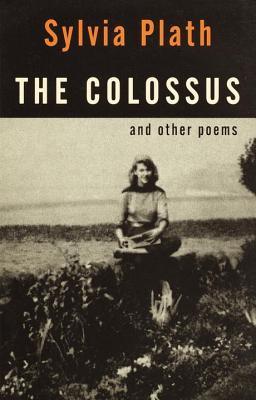
Title: The Colossus and Other Poems
Author: Sylvia Plath
Genre: Poetry; Classics; Fiction
Goodreads Rating: 4.2/ 5 stars
Pages: 84 (Paperback)
Publisher: Vintage Books
Published: May 19, 1998 (Original Publication: 1960)

Summary: With this startling, exhilarating book of poems, which was first published in 1960, Sylvia Plath burst into literature with spectacular force. In such classics, as "The Beekeeper's Daughter," "The Disquieting Muses," "I Want, I Want," and "Full Fathom Five," she writes about sows and skeletons, fathers and suicides, about the noisy imperatives of life and the chilly hunger for death. Graceful in their craftsmanship, wonderfully original in their imagery, and presenting layer after layer of meaning, the forty poems in The Colossus are early artifacts of genius that still possess the power to move, delight, and shock.

Hate is a strong word, but it does properly convey how much I detest two questions in particular, in regards to reading. Who is your favorite author? What is your favorite book? I feel as though I never have a consistent answer for either one of those questions. Which isn't all that surprising seeing as though in the moment, my favorite author, genre, and book are largely dependent upon my mood. Of course, I have an archive of all-time favorite authors and books, but the favorites that I gravitate towards daily are always subject to change. However, Plath will forever be on my mind and have a place in my heart. Both her as an individual and her writing, have moved me in ways that only great literature can. Not only has she moved me, but she has inspired me time and time again, as well as contributed to the individual and the writer that I have become and am continuing to become.

This past week I wrote up an explication on Sylvia Plath's 1962 poem, "Lady Lazarus", and then presented said explication in my Intro to Literature class. The experience of analyzing and writing about one of my favorite poems by Plath, made me nostalgic and hungry for more of her writing. The Colossus and Other Poems is without a doubt one of my top most anticipated reads to tackle this year.


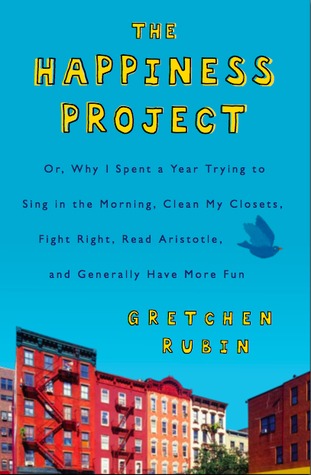
Title: The Happiness Project: Or, Why I spent a Year Trying to Sing in the Morning, Clean My Closets, Fight Right, Read Aristotle, and Generally Have More Fun
Author: Gretchen Rubin
Genre: Nonfiction; Self-help; Autobiography; Memoir
Goodreads Rating: 3.57/ 5 stars
Pages: 352 (Paperback)
Publisher: HarperCollins
Published: December 29, 2009

Summary: Gretchen Rubin had an epiphany one rainy afternoon in the unlikeliest of places: a city bus. “The days are long, but the years are short,” she realized. “Time is passing, and I’m not focusing enough on the things that really matter.” In that moment, she decided to dedicate a year to her happiness project.

In this lively and compelling account, Rubin chronicles her adventures during the twelve months she spent test-driving the wisdom of the ages, current scientific research, and lessons from popular culture about how to be happier. Among other things, she found that novelty and challenge are powerful sources of happiness; that money can help buy happiness, when spent wisely; that outer order contributes to inner calm; and that the very smallest of changes can make the biggest difference.

Nonfiction and I tend to not see eye to eye. Reading works of nonfiction often leaves me feeling underwhelmed, frustrated, or even bored. I’ve just never been a huge fan of the technical/mechanical style of writing that many nonfiction authors seem to gravitate towards. However, I do enjoy nonfiction works such as published essays/letters or journals from some of my favorite authors.
Lately, I’ve been intensely proactive about doing all that I can to continue to work towards becoming the best possible version of myself. This endeavor has even extended to finding self-help and self-growth books that could potentially leave me inspired, or open new doors for me, or reveal new paths to take, or supply me with a new healthier mindset. I figured that the coming springtime would be best welcomed with some new self-help and self-growth material.

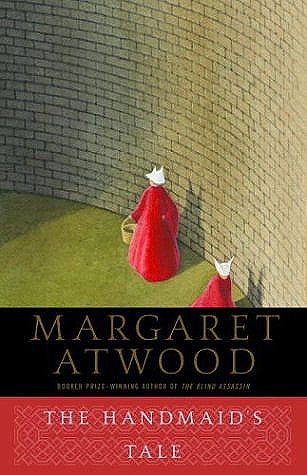
Title: The Handmaid's Tale
Author: Margaret Atwood
Genre: Fiction; Classics; Science Fiction; Dystopia; Feminism
Goodreads Rating: 4.03/ 5 stars
Pages: 311 (Paperback)
Publisher: Anchor Books
Published: March 16, 1998 (Originally publication: 1986)

Summary: Offred is a Handmaid in the Republic of Gilead. She may leave the home of the Commander and his wife once a day to walk to food markets whose signs are now pictures instead of words because women are no longer allowed to read. She must lie on her back once a month and pray that the Commander makes her pregnant, because in an age of declining births, Offred and the other Handmaids are valued only if their ovaries are viable. Offred can remember the years before, when she lived and made love with her husband, Luke; when she played with and protected her daughter; when she had a job, money of her own, and access to knowledge. But all of that is gone now...

Margaret Atwood is an author that I’ve had my eye on for quite some time, but I wasn’t sure which novel I should pick up by her. Atwood has quite a few published novels and stellar high praise for her writing and that combination can make selecting your introduction to said author, intimidating. But, after the mess of politics and social issues in 2016 and the current pitiful political climate in 2017 (all over the world), The Handmaid’s Tale began to pop up in my literary newsfeeds as THE book that everyone, particularly women, should make a point to read this year.
I can’t pass up an opportunity to experience a new author and to also continue to educate myself on social issues, and to add fuel to my hope for a better now and a better future (for all).

Title: Swamplandia!
Author: Karen Russell
Genre: Fiction; Magical Realism; Contemporary; Fantasy
Goodreads Rating: 3.21/ 5 stars
Pages: 400 (Paperback)
Publisher: Vintage Books
Published: July 26, 2011 (Originally publication: January 1, 2011)

Summary: The Bigtree alligator wrestling dynasty is in decline--think Buddenbrooks set in the Florida Everglades--and Swamplandia!, their island home and gator-wrestling theme park, is swiftly being encroached upon by a sophisticated competitor known as the "World of Darkness."

Ava, a resourceful but terrified twelve-year-old, must manage seventy gators and the vast, inscrutable landscape of her own grief. Her mother, Swamplandia!’s legendary headliner, has just died; her sister is having an affair with a ghost called the Dredgeman; her brother has secretly defected to the World of Darkness in a last-ditch effort to keep their sinking family afloat; and her father, Chief Bigtree, is AWOL. To save her family, Ava must journey on her own to a perilous part of the swamp called the "Underworld," a harrowing odyssey from which she emerges a true heroine.

Karen Russell was recommended to me by a friend and trusted fellow reader, about a year ago, and I’m just now getting around to her. I’m a sucker for well written Magical Realism novels so I’m hoping that Russell and I end up becoming fast friends. I’m excited to dive into her work, but I’m not certain on whether I’ll pick up Swamplandia! in spring or if I’ll save it for summer. As of right now, I’m leaning more towards summer but we’ll see!

Until next time! Thank you for stopping by! And if you have yet to do so, follow me here on my blog via email subscription to be able to stay informed on when new posts are uploaded.
My social media:
- Anisa


Thursday, February 23, 2017

Reading for Awareness!


February 26th - March 6th


It's almost the end of February, and with every ending comes a new beginning. In this case that new beginning, is the start of this year's National Eating Disorder Awareness Month. I'm a huge advocate for supporting and continuing to learn more about mental illness. Mental health awareness has come such a long way in recent years, but there's still so much work to do! I've decided to pick up an old favorite of mine, that is centered around eating disorders, mental health, and how ED's can impact and severely alter an individual as a person and their day to day life.

As we, book worms, know there really isn't any way other better way to bring a concept near and dear to our hearts, than to have the words imprinted in both our minds and our hearts. Reading is one of the easiest and best ways to walk a mile in someone else's shoes; to develop a better sense of empathy; and to grow as an individual and to grow in knowledge and experience. You never know when the words you have read will be of use in your life. And if you don't need to hear these words for yourself, there may come a time when someone may need to hear them from you.

So consider taking the time in the coming week to pick up a book that has the potential to bring awareness to both your life and those around you.

The old favorite that I've selected is Skinny by Ibi Kaslik.
468657

Summary: Do you ever get hungry?  Too hungry to eat?
Holly's older sister, Giselle, is self-destructing. Haunted by her love-deprived relationship with her late father, this once strong role model and medical student, is gripped by anorexia. Holly, a track star, struggles to keep her own life in balance while coping with the mental and physical deterioration of her beloved sister. Together, they can feel themselves slipping and are holding on for dear life.

This honest look at the special bond between sisters is told from the perspective of both girls, as they alternate narrating each chapter.  Gritty and often wryly funny, Skinny explores family relationships, love, pain, and the hunger for acceptance that drives all of us. 

Author: Ibi Kaslik
Genre: Young Adult; Mental Health; Mental Illness
Goodreads Rating: 3.44/ 5 stars
Pages: 256
Publisher: Walker Childrens
Published: April 17, 2004

**Important Sidenote: This book was published in the early 2000's, when the YA section had yet to become a concept. Books for young adults at that point were classified as Teen. At this time it was really only older teens/mature teenage readers who were reading books from the Teen section, but as younger children (13-15) were beginning to try to select books from the Teen section, which wasn't all that censored in regards to language or material the way that YA books are presently, the YA label was born and certain books were moved out of the Teen section. Skinny is one of those books that does contain two narrators and while the one is a teenager, the material itself is heavy and not terribly YA friendly. The publisher age recommendation for reading this book is 14+. I'm going to venture to say that it falls more so around the 16-17+ age range. While I think that this is a necessary read, there is a specific age group that it is suited for. Although younger, mature readers could definitely be an exception.

I'd love to hear about your selections if you choose to pick up a book for this coming week. Happy reading!


Until next time! Thank you for stopping by! And if you have yet to do so, follow me here on my blog via email subscription to be able to stay informed on when new posts are uploaded.

My social media:


Thursday, February 2, 2017

Some of Us Had Been Threatening Our Friend Colby - Donald Barthelme (In A Field of Words: A Creative Writing Text - Janet McCann)


Summary: This is an innovative, self-help guide for beginning-level creative writing, designed to help aspiring writers find words for their stories and give them shape. It includes all a writer needs to begin writing fiction, creative nonfiction and poetry including ways to get started, things to write about and where to find help in all elements of writing including first publication. The text incorporates practice exercises and a multi-cultural mini-anthology of work in all three genres. Discusses in detail the elements and techniques of poetry, fiction and creative non-fiction. Provides practical exercises sections and features a Multi-cultural anthology. For aspiring writers interested in learning how to write poetry, prose and non-fiction.

Author: Janet McCann
Story: Some of Us Had Been Threatening Our Friend Colby
Genre: Short Story, Fiction
Goodreads Rating:
My Rating (for this short story): 3.5/5
Pages (for this story): 21-24 (281)
Publisher: Pearson

(Side note: The following is my analytical critique of a short story from a collection of stories that I am currently studying in my Intro to Creative Writing course. I wanted to share this story because of how interesting it is, and the concept of depositing the bizarre into our everyday realities.)

"Some of us had been threatening our friend Colby for a long time, because of the way he had been behaving. And now he'd gone too far, so we decided to hang him."


                        Donald Barthelme’s short story, Some of Us Had Been Threatening Our Friend Colby is bizarre, engrossing, and somewhat intense. The first two sentences alone, are enough to grab the reader’s attention and leave them wanting more – craving answers and closure. The reader is left with more questions than answers by the final sentence. Many of these unanswered questions are crucial to the plot as well, which incites a great deal of confusion in regards to what the author is attempting to convey to his reader.

                        Barthelme doesn’t waste any time in this story, right off the bat the reader is introduced to the plot, the characters, and the dilemma. The narrator remains unnamed, but highly prevalent and involved in the story, and his/her lack of identity is somewhat irritating amidst the already confusing plethora of unanswered questions and unknown facts. As the reader continues to read on, he/she is introduced to the dilemma. Colby William’s friends have deemed that he had gone too far, something that Colby, himself, did not dispute. But, Colby does interject by mentioning that everyone goes a little too far sometimes. His friends shrug off his argument and proceed to make detailed plans and arrangements for the hanging that they will be holding as a form of moral punishment for Colby’s transgression. These detailed arrangements range from hiring musicians, sending out invitations to all the guests, serving drinks and food, designating a venue for the hanging, deciding on whether they should use a gibbet or a tree, hangman or no hangman, and lastly rope or wire for the noose.

                        Throughout this entire debate over how Colby’s hanging should be orchestrated and how to hide the details of the event from law enforcement, Colby’s friends are kind enough to allow him to have a say in some of the tedious decision making, since after all it is his hanging and a man only gets one opportunity in life to be hanged. The reader is informed that the day of Colby’s hanging goes off without a hitch; no rain to dampen the day, the music was played well, and they didn’t run out of scotch. The unnamed narrator leaves the reader with two final thoughts. He/she states that what he/she could remember best from the event is Colby’s look of gratefulness after the narrator chimed in and said that wire for a noose would be too distasteful and that no one dared to go too far ever again.

                        Barthelme’s short story was written in the first-person point – of – view. Which is interesting because the narrator remains both unnamed and a wallflower for a good portion of the tale. It’s almost as if the narrator’s sole purpose is to act as a window for the reader to be able to look in on the events and the conversation that transpires. Aside from somewhat steering the conversation in a certain direction, once or twice, the narrator’s actual contribution to the conversation is minimal. Often, a writer will employ the usage of the first-person narrative to create a sense of rapport or familiarity between the narrator and the reader, which proves to be somewhat confusing in this instance since the narrator remains unnamed, unknown, and distant.

                        The characters in this story are unanimous in their conviction to hang Colby and to do so tastefully. But, disagreements became apparent when there was debate over whether they should use a gibbet or a tree, wire or rope for the noose, if Colby could have a firing squad instead of a hanging, should Colby jump off a chair or a ball with the noose around his neck? What I found interesting is that there was no sign as to who had initiated the desire to hang Colby for his transgression and the fact that out of Colby’s seven friends not even one of them questioned the lack of morality in this execution of their friend.

                        This short story is incredibly bizarre and even unsettling. The more that I read and the more that I grow on a personal level, the more difficult it is for me to refer to another individual’s reality or proposed reality as being bizarre, when my own reality may end up being just as bizarre in their eyes. It is difficult for me to fathom how an individual’s group of friends can be referred to as friends when they are doggedly set on hanging you for an offense that isn’t even mentioned at any point within the story. But, this story is odd and unnerving. In regards to how it could potentially fit into our “everyday” experience, I suppose that Colby’s friends’ determinedness and unshakeable stubbornness could be compared to our own refusals to see reason when we are agitated or fed up with an individual’s repeated “bad” behavior. Then the next question would be, are we Colby or are we Colby’s friends in these “everyday” experiences? Are we able to admit when we have gone too far? Do we go the extra mile and threaten our friend with death because they went too far, one too many times?

                        I thoroughly enjoyed how engaging Barthelme’s writing was and the ease with which his thoughts bled into one another. I even appreciated the bizarreness to an extent. It was different and unanticipated. However, I didn’t care for the enduring anonymity of the narrator, or the unaddressed question of what exactly was Colby’s wrongdoing; why didn’t any of the guests make a fuss about a man being hanged even though capital punishment had been outlawed? Why were Colby’s friends able to find moral fault in his wrongdoing, but not in their eagerness to hang their friend? Why did Colby’s friends feel as though it was their moral obligation to hang Colby for his unnamed wrongdoing? Why didn’t Colby’s friends take the time to reflect on his point that everyone goes too far sometimes? If someone else from the group were to commit an equally offensive transgression would they be subject to a hanging, as well? Why didn’t Colby inform law enforcement that his friends were planning to hang him? Was his offense that horrible that he couldn’t ask for help? But, most importantly was Colby hanged? The title of the short story is: Some of Us Had Been Threatening Our Friend Colby. Threatening an individual and carrying out that threat are both horrible, but very different. Were Colby’s friends just threatening him or did they truly kill him? Or was Colby made an example out of to make sure that no one else in the group “goes too far”? What exactly is “too far”? And who has the power to dictate what is or isn’t “going too far”? I’m not entirely sure. This lack of closure and answers is probably the most frustrating aspect of being reader, in my opinion. In the end, I am left feeling confused, irritated with the lack of answers, and oddly wanting more writing to have been tacked on to this story.

What are your thoughts on depositing the bizarre into our everyday realities? Thoughts on Barthelme's writing?

Links:
Link to this Pearson collection of literary works
Link to Short Stories by Barthelme (Including Some of Us Had...)

Until next time! Thank you for stopping by! And if you have yet to do so, follow me here on my blog via email subscription to be able to stay informed on when new posts are uploaded.

Where the Wild Tales Are Instagram
Goodreads


Tuesday, January 24, 2017

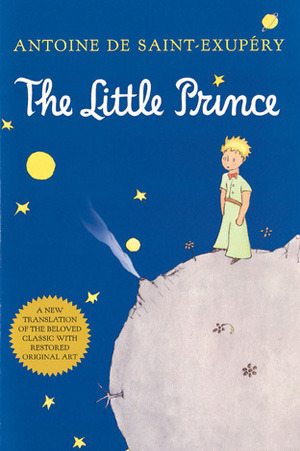
The Little Prince - Antoine de Saint - Exupery Review

           e


Summary: With a timeless charm it tells the story of a little boy who leaves the safety of his own tiny planet to travel the universe, learning the vagaries of adult behavior through a series of extraordinary encounters. His personal odyssey culminates in a voyage to Earth and further adventures.

Author: Antoine de Saint - Exupery
Genre: Classic Literature, Fiction, Fantasy, Childrens, French Literature, European Literature, Philosophy
Goodreads Rating: 4.5/ 5 stars
My Rating: 5/ 5 stars
Pages: 83
Publisher: Mariner Books

"How clumsy I felt! I didn't know how to reach him, where to find him... It's so mysterious, the land of tears."

Before The Little Prince, came Antoine de Saint - Exupery. Saint - Exupery was born in Lyon, France on June 29, 1900. He was born into aristocracy. Saint - Exupery's love for aviation sprouted at an early age. He flew his first plane at the age of twelve and in his adult years he went on to become a pioneering aviator. As a young man, Antoine de Saint - Exupery decided to try his hand at writing. He published a few short stories and magazine entries, but his first novel, Courrier Sud (Southern Mail) was published in 1929. His first novel, along with all of his later novels would feature flying and a love for the open sky in some way, shape or form.

Exiled from France in 1940 for his refusal to stop speaking out against Germany in the face of the stirring of Nazi Germany, after France's armistice with Germany, Saint - Exupery fled to the United States of America in hopes of convincing the U.S. government to take immediate action to snuff out the rise of Nazi Germany. He was unable to gather any real support against the rising of Nazi Germany in the U.S., but his writing career did take off. April 6, 1943 The Little Prince was published in New York. (The French edition, Le Petit Prince wouldn't be published until 1946 after both the liberation of France at the end of WWII and Saint - Exupery's own death). The Little Prince was Saint -Exupery's last publication before he went off on a reconnaissance mission for the Allies and disappeared over the Mediterranean sea. Neither Saint - Exupery or his plane were ever found, until sixty years later. What was left of the wreckage of his plane was found and identified in the Mediterranean, but the mystery of where his remains lie remains unsolved. It is unknown whether the plane crash was a result of Saint - Exupery being shot down, having a mechanical malfunction, or even suicide. Whichever the case may have been, Saint - Exupery died at the age of forty-four; leaving behind a widow and many unanswered questions. Saint - Exupery's widow, Consuelo de Saint - Exupery, a Salvadoran - French writer and artist, went on to preserve her late husband's work and image. She laid witness to the revered national French hero that her husband became known as.

French aristocrat, writer, poet, and pioneering aviator Antoine de Saint - Exupery wore many hats during his too short life, and it wasn't until after his death that his work received any real appreciation. Posthumously, Saint - Exupery was deemed a laureate of several of France's highest literary awards and the U.S. National Book Award. His reputation as a French hero was gained after his death, as well.  

"But eyes are blind. You have to look with the heart."

The Little Prince is a novel that had been patiently waiting on my TBR list for quite some time, for at least over a year. Whenever I scrolled through bookstagram or Goodreads and I came across The Little Prince, I'd make a mental note to finally purchase the book and see what all of the fuss was about. I never got around to buying the novel for myself. Instead, I was lucky enough to be sent a copy from an absolutely wonderful friend, for Christmas. And yes, I'm still referring to my friend as wonderful even though she didn't prepare me in the slightest for the wild emotional ride that those eighty-three pages whisked me away on. I went into reading The Little Prince with the expectation of a cute, heart-warming read; the standard final thought that most bookstagrammers seemed to have adopted in regards to The Little Prince.

"I wonder," he said, "if the stars are lit up that each of us can find our own way."

At this point in my life, I'm convinced that a reader's perception of a novel is only as deep as the reader's own self-introspection, hence why I finished this book with a heavy heart and not even the slightest sentiment of the tale being cute or heartwarming. Without a doubt, Saint - Exupery brought to life a tale that strums on, plucks, and weighs on your heartstrings. The Little Prince is so much more than "cute" or "heartwarming"; it is an unapologetic, real, and a poignantly beautiful view of life, love, and loss. Saint - Exupery is the kind of author who intrudes on your heart and mind, simultaneously, with the sole purpose of making you stop to appreciate the smaller details in order to see and understand the bigger picture. The Little Prince offers up a telescope to see all the world through, and when you look through that lens you see the world as you'd like it be and as it should be. And you'll end up wishing that you could keep your eye glued to that lens so as to avoid the reality of the world and life, but living through a lens, no matter how ideal, defeats the purpose of living. Rather, we are meant to use such telescopes to look to the sky and find our stars; our path, our purpose, our identities.

In The Little Prince, we meet the Little Prince who leaves his small planet and his rose and two volcanoes behind in order to see the universe. Our Little Prince ends up on Earth, in the Sahara Desert to be exact. The Little Prince is perturbed by this great sadness he feels no matter whom he speaks to. Not even taming the wild fox brings lasting happiness to the Little Prince. Our narrator realizes that he is unhappy because he is neglecting his duty to his lone rose back on his home planet. But how to get back home? The Little Prince stumbles upon a small snake that promises that he can send the Little Prince home, with a quick bite and almost no pain. To go home means to die a physical death. So as the Little Prince attempts to come to terms with this knowledge he finds the stranded Pilot, whose plane is down and in need of repairs. Together the two make a wonderful pairing and become fast friends. They brave the desert together in search of water and truth. But their most daunting trial is facing loss and the ache of losing the physical presence of a loved one. More than just a children's story, The Little Prince is a deeply emotional account of life and finding the beauty in mystery and sadness... I cannot recommend this novel enough.

Recurring Main Characters:
  • The Little Prince
  • The Pilot
  • The Snake
  • The Rose
Primary Setting: The Sahara Desert

Major Themes:
  • The snake
    • Loneliness
    • Death
  • The danger of narrow - mindedness
    • The Little Prince represents a child's open - mindedness, as well as the wanderer who is decidedly eternally inquisitive. To Saint - Exupery, inquisitiveness represented the key to true understanding and happiness.
  • Enlightenment
    • To become enlightened we must explore
    • Adventure; explore the outside world
    • Introspection; explore within yourself
    • Saint - Exupery believed that spiritual growth could only be done properly through active exploration
    • We come to better understand our natures and our purposes in this world through exploring the world and our own feelings
  • Responsibility
    • The belief that relationships teach responsibility, and that responsibility is required for lasting healthy relationships
    • Relationships give us a better understanding and appreciation of our individual responsibilities to the world
  • True meanings are hidden
    • In life definite answers are never guaranteed
    • The exploration of the unknown is necessary
  • Taming
    • Creating ties
    • We must tame people and concepts to understand them
  • The desert = a hostile place; the narrator's mind
  • The drinking of the water = symbolizes spiritual fulfillment
  • The train rides = the rushed voyages we take in life that never result in happiness. We tend to never be happy where we are because we don't live in the present, we live for the future. The symbolization of the trains rushing at one another from opposite directions hints at how contradictory and purposeless our efforts at life as adults, truly are. But it is the children with hungry eyes glued to the windows that grasp the truth: that the journey is more important than the destination.
" People start out in express trains, but they no longer know what they're looking for."

**Spoiler Alert**


By far my favorite analysis of this short tale is the relationship drawn between the final scene of The Little Prince and the childhood death of Antoine de Saint - Exupery's younger brother, Francois de Saint - Exupery. At the age of fifteen, Francois died of rheumatic fever. He was Antoine's closest confidant and his memory would go on to serve as the inspiration for both the tale of The Little Prince and the character of the Little Prince, himself. Francois was the ever inquisitive, blond haired, Little Prince and Antoine was the pilot who couldn't hold on tight enough to the Little Prince, so he was left with the stars as an ever present and ever lasting memory of both his brother, his friend, and the need to make life meaningful. Francois' death is best witnessed in the final dramatic and heart wrenching scene of The Little Prince. Antoine's reflection:
“…remained motionless for an instant. He did not cry out. He fell as gently as a [young] tree falls”
 of his younger brother's death is woven into the ending.

"You understand. It's too far. I can't take this body with me. It's too heavy."
I said nothing.
"But it'll be like an old abandoned shell. There's nothing sad about an old shell..."
I said nothing.
He was a little disheartened now. But made one more effort.
"It'll be nice, you know. I'll be looking at the stars, too. All the stars will be wells with a rusty pulley. All the stars will pour out water for me to drink..."
I said nothing.

Each and every single one of us have been given the chance to live this life and to bring meaning to our own lives and to the lives of those around us. Our lives are journeys. And sometimes we go on a journey for the truth, or to find someone, or to find ourselves, or to find fulfillment. But wherever we go, wherever we end up, we are to know that our stars will never leave us or lead us astray. The stars will be our forever companions in this lifetime, constantly overhead; in our hearts and in our minds, just as all of our loved ones who have passed or who have drifted away, will be. What is written on your heart can never be erased, so no matter where you fly to, who you meet, or where you end up, never forget to look to the stars...

"It's all a great mystery."


Until next time! Thank you for stopping by! And if you have yet to do so, follow me here on my blog via email subscription to be able to stay informed on when new posts are uploaded.


- Anisa